
Even the world’s best professional cyclists aren’t immune to problems with their bike setup.
In an article published by road.cc on 20 November 2026, Portuguese professional cyclist João Almeida revealed that he had been struggling with knee pain for two weeks before discovering a broken saddle clamp on his bicycle.
It’s a fascinating example of how an issue with the bicycle itself can potentially contribute to pain, even for a rider competing at the highest level of professional cycling.
But there is a much bigger lesson here for cyclists of all abilities.
When we experience pain on the bike, we naturally assume something is wrong with our body. However, how our body interacts with the bicycle is equally important.
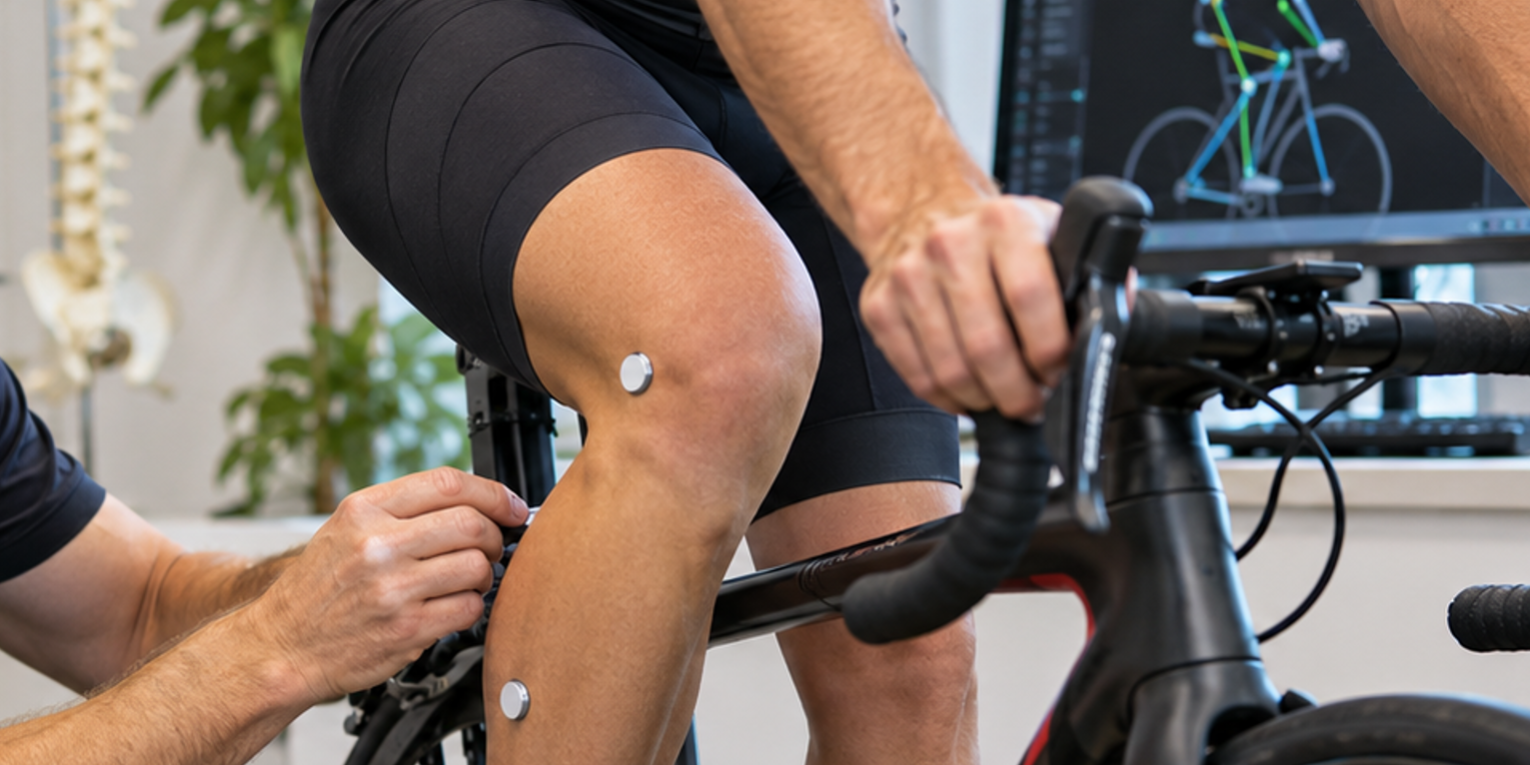
At Kernow Physio in Cornwall, physiotherapist and professional bike fit specialist Scott Tomkinson considers both the rider and the bicycle when investigating cycling-related pain, discomfort and performance issues.
Thousands of Pedal Revolutions – Why Small Changes Matter
Imagine cycling for two hours at an average cadence of 90 revolutions per minute.
That’s 10,800 pedal revolutions.
During that time, your hips, knees and ankles repeatedly move through a similar range of motion, while your upper body supports and stabilises your riding position.
If your bicycle setup is placing additional demands on certain muscles, tendons or joints, those demands are repeated thousands of times during a single ride.
A seemingly insignificant change in saddle position, cleat alignment or handlebar reach could alter how your body moves and distributes load.
This doesn’t automatically mean an injury will occur, but when combined with fatigue, increased training loads, previous injuries or restricted mobility, it could contribute to the development of symptoms.
Understanding the Three Main Contact Points on a Bicycle
There are three main areas where your body interacts directly with your bicycle:
- Your pelvis and the saddle.
- Your feet and the pedals.
- Your hands and the handlebars.
These contact points are interconnected. Changing one can influence how your body interacts with the other two.
This is why addressing cycling discomfort isn’t always as straightforward as adjusting the component closest to where you feel the pain.
1. The Saddle – Stability, Comfort and Power Production
The saddle provides an important platform from which the rider can stabilise their pelvis and generate power through the pedals.
Almeida’s experience highlights the importance of maintaining a consistent and mechanically secure saddle position.
However, there are several other factors to consider:
- Saddle height
- Saddle tilt
- Fore-and-aft position
- Saddle width and shape
- Pelvic stability
- Pressure distribution
A saddle that is too high for an individual may encourage excessive pelvic movement or compensatory ankle motion. A saddle that is too low may increase knee flexion and alter the loads experienced around the knee.
Similarly, moving the saddle forwards or backwards can influence hip angles, knee loading, upper body posture and the rider’s effective reach to the handlebars.
Saddle-related issues may contribute to knee pain, lower back discomfort, saddle sores, numbness and difficulties maintaining a comfortable riding position.
However, the saddle itself isn’t always the problem.
Restricted hip mobility, previous injuries or difficulties controlling pelvic movement can also influence how a rider sits on the bicycle.
At Kernow Physio, saddle pressure mapping can be used alongside clinical assessment to help understand these interactions.
2. The Feet, Cycling Shoes, Cleats and Pedals
Every pedal stroke transfers force from the rider to the bicycle through the feet.
Despite this, the foot-shoe-pedal interface is an area that many cyclists overlook.
Factors worth considering include:
- Cleat rotation and positioning
- Cleat float
- Cycling shoe width and shape
- Foot support within the shoe
- Pedal stance width
- Ankle mobility
- Individual foot mechanics
Our feet do not all function in the same way. Even the left and right foot of the same rider may have different characteristics.
A cleat position that doesn’t accommodate a rider’s natural movement may contribute to unwanted loading or discomfort elsewhere in the lower limb.
Potential symptoms associated with this interface include:
- Knee pain
- Foot numbness
- Burning sensations in the feet, often referred to as hot foot
- Forefoot discomfort
- Calf fatigue
- Achilles tendon discomfort
A well-fitting cycling shoe and an appropriately assessed cleat position can provide a comfortable and stable interface through which to apply force.
For some cyclists, custom insoles may also help improve foot support and pressure distribution.
At Kernow Physio, custom cycling insoles can be individually assessed and fitted, either as part of a bike fit or as a standalone service.
The important point is that there is no single correct foot or cleat position that works for everyone.
3. The Handlebars – More Than Just Steering
Handlebar position influences considerably more than how a cyclist controls their bicycle.
The height, width, reach and shape of the handlebars, along with the position of the brake hoods, can all affect upper body posture and weight distribution.
A riding position that places excessive demands on the upper body may contribute to:
- Neck pain
- Shoulder discomfort
- Lower back pain
- Wrist pain
- Numbness or tingling in the hands
- Upper body fatigue
However, pain in the hands does not necessarily mean the handlebars are the primary problem.
For example, a rider who continually slides forwards on the saddle may place additional pressure through their hands to maintain their position.
Similarly, restricted hip mobility or a riding position that exceeds the rider’s physical capabilities may lead to compensatory movements elsewhere in the body.
Handlebar width is another interesting consideration, particularly with the increasing popularity of narrow handlebars in professional cycling.
While narrower handlebars may offer aerodynamic advantages in some circumstances, the position must also be appropriate for the individual rider’s anatomy, comfort and ability to control the bicycle.
What works for a professional cyclist isn’t necessarily what works for you.
Beyond the Contact Points – What Else Can Influence Your Riding Position?
Although the saddle, pedals and handlebars are the primary contact areas, other components also influence the relationship between the rider and the bicycle.
Crank Length
Crank length influences the size of the circle through which your feet travel during each pedal revolution.
Longer cranks generally require greater hip and knee flexion at the top of the pedal stroke, when other relevant factors are accounted for.
For some riders, particularly those with restricted hip mobility, pain or previous injuries, shorter cranks may be worth considering.
However, shorter cranks are not automatically better, and changing crank length requires other aspects of the bike fit to be reassessed.
Stem Length and Angle
The stem helps determine how far forwards and how low the rider needs to reach towards the handlebars.
Changes to stem length or angle can influence spinal posture, shoulder position, weight distribution and bicycle handling.
The appropriate setup depends on the rider’s physical capabilities, the bicycle geometry and the intended type of cycling.
Frame Size and Geometry
A bicycle that is fundamentally unsuitable for the rider can limit what can be achieved through adjustments.
Stack, reach and overall frame geometry influence how easily a comfortable and sustainable riding position can be achieved.
This is one reason why seeking professional bike fitting advice before purchasing a new bicycle can be valuable.
Tyre Width and Pressure
Although not direct contact points between the rider and the bicycle, tyres influence how road vibration and impacts are transmitted through the bike.
Appropriate tyre width and pressure can help improve comfort, grip and rolling efficiency, depending on the rider’s weight, road surface and equipment.
For cyclists spending long hours on uneven Cornish roads, these factors are certainly worth considering.
Can a Bike Fit Improve Power Generation?
Cyclists often focus on increasing power through structured training, strength work and expensive equipment upgrades.
But what about the position from which that power is generated?
A rider’s position influences muscle recruitment, joint angles, stability and the mechanical demands of pedalling.
An unsuitable position may make it harder for an individual to produce or sustain power comfortably.
A carefully considered bike fit aims to find a balance between:
- Effective power production
- Comfort over the intended riding duration
- Aerodynamic efficiency
- Sustainable muscular effort
- Bicycle control
- The rider’s individual physical capabilities
The most aerodynamic position is of limited value if you cannot sustain it.
Equally, a position that feels comfortable for ten minutes on an indoor trainer may become uncomfortable after three hours on the road.
A successful bike fit should reflect the demands of your actual cycling, not simply how your position looks in a photograph.
Improvements in power are possible, but they are not guaranteed. The objective is to help establish a position that allows your body to perform effectively.
Why Cycling Injuries Are Rarely About Just One Thing
From a physiotherapy perspective, it is important to understand that cycling-related injuries and persistent pain can have multiple contributing factors.
A rider experiencing knee pain might have an issue with saddle height or cleat positioning, but other factors could include:
- A sudden increase in training volume or intensity
- Previous knee injuries
- Reduced hip or ankle mobility
- Muscle weakness or reduced endurance
- Inadequate recovery
- Excessive loading during hill climbing
- A recent change in cycling equipment
Simply adjusting the bicycle without considering these factors may leave important contributors to the problem unaddressed.
Likewise, providing rehabilitation exercises without assessing a potentially unsuitable riding position may overlook another part of the problem.
This is where combining physiotherapy with professional bike fitting becomes particularly valuable.
Has Anything Changed on Your Bike Recently?
Almeida’s experience provides a useful reminder for every cyclist.
Before assuming that a new pain or discomfort is entirely related to your body, consider whether anything has changed with your bicycle or equipment.
Ask yourself:
- Have I recently changed my saddle?
- Has my seatpost slipped?
- Have I replaced my cycling shoes or cleats?
- Have I changed my pedal system?
- Have I adjusted my handlebars or stem?
- Am I spending more time on an indoor trainer?
- Have I recently transported or dismantled my bicycle?
- Are any of my components loose, damaged or excessively worn?
- Have I increased my training volume or intensity?
Keeping a record of your established bike fit measurements can also be useful when replacing components, travelling with your bicycle or transferring your position to a new bike.
Always stop riding if you discover a damaged or insecure structural component, and have it checked and repaired before continuing.
If pain persists, don’t simply assume that further bike adjustments will resolve it. A clinical assessment may be appropriate.
The Physiotherapy Difference at Kernow Physio
Scott Tomkinson has more than 20 years of physiotherapy experience and has completed over 3,000 professional bike fits.
His background includes working within professional cycling with Team Garmin, alongside extensive experience assessing and treating musculoskeletal injuries.
He also runs the Cornwall Knee Clinic at Duchy Hospital, bringing specialist experience in knee-related conditions to his wider clinical practice.
At Kernow Physio, a bike fit goes beyond adjusting the bicycle.
Understanding the rider’s injury history, joint mobility, strength, movement patterns and individual cycling goals is an important part of the process.
Where appropriate, Scott can also recommend specific rehabilitation exercises to address physical limitations that may be contributing to discomfort on the bike.
Whether you’re a competitive road cyclist, triathlete, gravel rider or recreational cyclist who simply wants to enjoy longer rides, the principles remain the same.
The bicycle should work with your body, not against it.
Book a Physiotherapy-Led Bike Fit in Cornwall
If you’re experiencing knee pain, saddle discomfort, numb hands or feet, back pain or difficulties maintaining a comfortable and effective riding position, a physiotherapy-led bike fit could help identify contributing factors.
You don’t need to be a professional cyclist to benefit from understanding how your body interacts with your bicycle.
References and Further Reading
- road.cc – João Almeida battles knee pain for two weeks because of a broken seat clamp, 20 November 2026.
https://road.cc/news/cycling-live-blog-20-november-2026 - Cycling position optimisation – a systematic review of the impact of positional changes on biomechanical and physiological factors in cycling.
https://doi.org/10.1080/02640414.2024.2394752 - The influence of extrinsic factors on knee biomechanics during cycling: a systematic review of the literature.
https://pubmed.ncbi.nlm.nih.gov/29234554/ - The role of a bike fit in cyclists with hip pain: a clinical commentary.
https://pmc.ncbi.nlm.nih.gov/articles/PMC6818133/